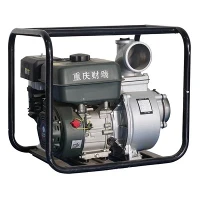
The differences between gasoline engines and diesel engines are as follows:
Ignition method: Gasoline engines require a spark plug to ignite the mixture, while diesel engines use compression autoignition ignition.
Fuel: The fuel for gasoline engines is gasoline, while the fuel for diesel engines is diesel.
Speed: Diesel engines have a lower speed, generally 1500-2400 rpm, while gasoline engines have a higher speed, generally 3000-6000 rpm.
Torque: The diesel engine has high torque and is better than the gasoline engine in terms of complex road surfaces, climbing, and load. The gasoline engine is better than the diesel engine in speeding up on flat terrain such as highways and driving at high speeds.
Fuel consumption: Compared with gasoline, diesel has greater power, higher ignition point, and lower volatility. Therefore, the fuel economy of diesel engines is 30% higher than that of gasoline engines.
Noise: Due to the compression-ignition ignition method of diesel vehicles, diesel vehicles must be compression-ignited to a certain extent before they can generate power, so their explosion sounds will be louder. Therefore, the noise of diesel engines is louder than that of gasoline engines.