

Diesel Engine
What Is Diesel Engine?
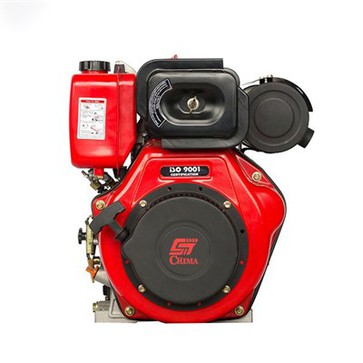
A diesel engine is a powerful, efficient and reliable form of an internal combustion engine.Unlike a gasoline engine, a diesel engine uses the heat generated by compressing air in the cylinder to ignite the fuel, resulting in higher efficiency and lower emissions.This process, known as compression ignition, also allows the diesel engine to produce more torque than a gasoline engine of the same size.
Advantages of Diesel Engine
Greater fuel efficiency
You may have noticed that the price of diesel fuel is higher than gasoline. Initially this might seem like a disadvantage, but because diesel engines are more fuel efficient, you'll make less trips to fill your tank. The greater fuel efficiency of diesel comes from its higher density, producing more energy with less fuel. Diesel also has a higher compression ratio, resulting in more effective combustion within the engine.
High power at low speeds
Piggybacking on better fuel efficiency, diesel engines are ideally suited for machines like tractors that operate at lower speeds. They can generate the same amount of power as gas engines at lower revolutions per minute (rpm), allowing for slower fuel consumption. Additionally, this lets you operate a wide range of power takeoff (pto) tractor attachments like tillers or box blades that require high power delivered at a consistent speed.
Increased durability
Diesel engines are widely considered more durable than their gas-powered counterparts. One of the biggest reasons is that diesel engines are water cooled. Paired with consistent operating speeds, this puts less wear and tear on the engine, providing a longer lifespan. Diesel fuel is also less acidic, causing less corrosion within the engine. With proper care, a diesel tractor can be passed down through generations with no drop-off in performance.
Easier maintenance
Despite their power, diesel engines are fairly simple from a mechanical standpoint. They're built from heavy-duty materials meant to work hard, and don't have many of the parts such as spark plugs or distributor caps that can go bad and need replacement. To make your life even easier, yanmar offers maintenance kits with 100% genuine parts such as fuel separators and air filters.


Why Choose Us
Our factory
Founded in 2006, the company has convenient transportation and beautiful environment, with a total area of more than 20,000 square meters.
200+ employees
With more than 200 employees, the company has high-quality technical personnel and a high-quality team, which can provide customers with perfect after-sales service in a timely manner.
Worldwide sales
Product sales cover more than 20 provinces and cities in China, such as Chongqing, Yunnan, Sichuan, Guizhou, Guangxi, Guangdong, Shandong, Heilongjiang, Hunan, Hubei, etc., and a number of the company's products have entered the agricultural machinery subsidy catalog. The company's products have been exported to Nigeria, Australia, India, the Philippines, Thailand, Vietnam and other countries in batches and obtained independent export rights.
Complete process system
The company has a strict organizational structure, perfect management system, strong technical force and rich manufacturing capacity.
Types of Diesel Engine

2-Stroke Diesel Engine
2-stroke engines provide a complete engine cycle in just two strokes. Essentially, as the cycle begins, air enters the cylinder, dispelling any old air. Then, the compression process occurs. As the piston nears the top of the cylinder, diesel fuel is added, producing chemical energy. That energy pushes the piston down, sending mechanical energy to the wheels.

4-Stroke Diesel Engine
In a 4-stroke engine, the pistons move up and down twice—for a total of four strokes. In addition to the compression and exhaust strokes (described above), the pistons also have return strokes. Essentially, the process begins with drawing the air into the cylinder as the piston moves down. As the piston moves up, the air is compressed. Once the piston reaches the top of the cylinder, the fuel is injected, causing the ignition. Upon ignition, the piston is pushed down, and the mechanical energy is released to the wheels. Finally, the piston moves back up to dispel the burnt gasses.
Application of Diesel Engine
Diesel engine locomotives are popular throughout the world in areas where track electrification is not feasible. They are the engine type of choice for cargo hauling freight trains which have heavier loads and require a strong engine.
Many different types of marine vehicles from cruise and cargo ships to privately owned leisure boats use diesel engines. Reciprocating diesel engines are used in many marine vehicles due to their fuel economy and operating simplicity as compared to other engine types. Their ability to power larger vehicles makes them a popular choice for ships and boats.
The reliability and power of diesel engines make them the engine of choice for large construction equipment like front loaders and bulldozers. Diesel engines are also used in many types of farming equipment, such as tractors due their durability and efficiency.
The oil and gas industry is time-intensive, and any loss of operating time even if just a few minutes can lead to extensive losses, which is precisely why this industry simply doesn’t function without diesel-powered generators. Right from drilling to pumping, from loading to transporting, these generators facilitate all functions alike. Moreover, they prove to be immensely useful in the case of oil and gas exploration in remote locations and often extreme conditions.
To ensure that these companies have seamless access to their data, it is extremely important for them to have reliable power backups else they might risk losing business and eventually money. Moreover, power outages make these servers easily accessible to hackers, which can lead to data theft and other subsequent issues. Therefore, having diesel engine generators for backup is more than just important for this segment.
Block
As the foundation of the modern diesel engine, the block is where all the parts for the basic internal combustion process are contained. The block has an open space for each cylinder, where the combustion happens.
Pistons
The pistons create the bottom of the combustion chamber, moving up and down in the cylinder while the engine is working. The movement of the pistons creates the compression of the air that leads to combustion.
Cylinder Head
The cylinder head closes the top of the open space in the block to reach the chamber where combustion happens. This head can be one unit to cover all the cylinders or multiple units that cover a section.
Valves
With the cylinder closed by the piston at the bottom and the cylinder head at the top, there needs to be a way to allow fresh air in and the leftover gasses out. This is where the valves come in. There are usually two valves for taking in air and two for the exhaust for each cylinder.
Fuel Injectors
Now, there needs to be a way to get fuel inside the cylinder, so there is something to combust. These components are a complex part of the process, spraying fuel in very precise patterns with highly controlled timing.
Camshaft
Rather than relying on an electrical system for opening valves and fuel injection, most engines use a mechanical process. The camshaft's revolutions control the timing of these events by lobes on the shaft that set them into motion.
Connecting Rods
These pieces connect to a piston at the bottom arm and carry the force of the combustion to the crankshaft.
Crankshaft
The crankshaft transfers the linear motion of combustion (the up-and-down part of the combustion process) into a rotational motion.
The Main Differences Between a Petrol Engine and a Diesel Engine Are
A gasoline engine inhales a mixture of gas and air, compresses it, and ignites the mixture with a spark. The diesel engine draws in air, compresses it, and then injects fuel into the compressed air. The heat of the compressed air ignites the fuel spontaneously. Diesel engines do not contain spark plugs.
The gasoline engine has a compression ratio of 8:1 to 12:1, while the diesel engine has a compression ratio of 14:1 to 25:1. The higher the compression ratio of the diesel engine, the higher the efficiency.
Gasoline engines typically use carburetors, i.e., mixing air and fuel long before they enter the cylinder, or intake channel fuel injection, i.e., injecting fuel before the intake stroke (outside the cylinder). So, in a gasoline engine, all fuel is loaded into the cylinder during the intake stroke, and then compressed. The compression of the fuel/air mixture limits the compression ratio of the engine - if the air is compressed excessively, the fuel/air mixture can spontaneously ignite and cause detonation. Diesel engines use direct fuel injection, i.e., diesel fuel is injected directly into the cylinders. Diesel engines only compress air, so the compression ratio can be much higher. The higher the compression ratio, the more power is generated.
Unlike gasoline injectors, diesel injectors must be able to withstand the temperature and pressure inside the cylinders and still deliver fuel in the form of a fine mist. To ensure that the mist is evenly distributed throughout the cylinder, some diesel engines are equipped with special intake valves or pre-combustion chambers. Newer diesel engines are equipped with a high-pressure common rail fuel system. For more information about this type of fuel system, see Diesel Fuel System Basics.
Diesel engines may be equipped with glow plugs. When a diesel engine is in a cold state, the compression process may not be able to raise the air temperature enough to ignite the fuel. A glow plug is an electric heating wire that promotes fuel ignition when the engine is cold. Glow plugs are usually installed on small diesel engines. Gasoline engines do not need glow plugs because they do not rely on spontaneous combustion.
How to Maintain Diesel Engine


Change your oil
If there's anything that will ruin a diesel engine almost immediately, it's not changing the oil. If an owner doesn't change their oil every three months or so, they'll usually suffer from a lot of wear and tear on their engine. Diesel engines aren't the type to suffer from low oil, though – in fact, if you add a quart or two before your next oil change is due, that won't damage your engine at all. Still, keeping it topped off every few months will keep everything running smoothly for as long as possible.
Get regular fluid levels checked
Another thing that diesel owners should do when they get a check-up is to have their fluid levels checked. This includes checking the coolant/antifreeze level in their radiator along with making sure that there's enough power steering fluid in the system and enough brake fluid to stop the vehicle when necessary. The reason diesel engines can be so difficult to start when they're cold is that there's a lot of pressure involved in the system, and if any one of these fluids runs low or completely disappears, then you'll have some problems starting up your vehicle until it's refilled.
Check the oil filter
To keep your diesel engine running as smoothly as possible, you also need to make sure that the oil filter is clean and free from debris at all times. If you don't do this and things start getting clogged up, your car or truck will lose power and eventually won't run at all unless you get everything cleaned out and replaced with new parts. Even though filters may seem like small components that take care of themselves once installed, they're definitely not- keeping them clean is key to keeping your engine in good working order.
Get a diagnostic test
Make sure that when you get any diesel repairs done to your vehicle or equipment, they come with diagnostics tests so that the technicians are able to see if there are any clogs in your filters or other parts of the system. Having someone check all of these components out at once will ensure that you don't have to keep paying for more maintenance work for things that could have been addressed during your last visit to the repair shop.
Use the right fuel
Using diesel fuel in a gasoline vehicle is definitely possible, but it won't make your engine run any better. In fact, it will usually clog up your filters and might even damage the pump on your car or truck. Diesel engines need diesel fuel to operate at peak efficiency; if there's no filter separating the two types of fuels, then you'll end up with some major problems that can cost a lot of money to fix. Using the right fuel is especially important if you own a diesel vehicle that has an emission system- using the wrong kind of fuel might cause damage to the engine that will lead to it being unable to pass inspection.
Flush out old fuel
When you buy a new car or truck, chances are good that the dealer will have flushed out all of the old gasoline left in its tank before handing it over so that there's no bad gas in your tank when you get behind the wheel for your test drive. Diesel engines need to be treated with more tlc than their gasoline counterparts, though, so make sure that any shop doing repairs on either part of your diesel vehicle flushes out any old diesel residue from previous owners as well as new fuel that you just bought.
Add fuel stabilizer before storage
This may seem like common sense for those who don't know much about diesel engines, but diesel vehicles are prone to problems when they're running low on diesel fuel as well as when they have a clogged fuel filter. Keeping fresh diesel in your tank and making sure that you frequently change out your fuel filters will keep them from getting clogged up-but to really protect yourself from seeing any long-term problems with your diesel vehicle, make sure that you add a stabilizer once the tank is full before putting it into storage for a while.
How Does a Diesel Engine Start
Intake stroke
In this phase, the piston travels from top dead center (TDC) to bottom dead center (BDC). This results in low pressure inside the cylinder. All diesel engines are turbocharged, so air isn’t drawn in. Rather, it is waiting behind the intake valve under pressure. As soon as the valve opens, the air rushes in.
Compression stroke
The piston travels from BDC back to TDC and prepares for combustion. The compression creates heat, which ignites atomized diesel fuel. There is no spark necessary. Diesel fuel will self-ignite if it is atomized, or sprayed into the cylinder in a fine mist.
Power stroke
In the power stroke, the piston goes from TDC to BDC. The combustion creates pressure to move the piston downward, and this shifts the power to the crankshaft.
Exhaust stroke
In the last stroke, the piston travels from BDC to TDC. As it rises, exhaust gases are pushed from the cylinder and through the exhaust valve. They go into the emissions system and are then pushed from the vehicle.
How Does a Diesel Engine Work Step-by-Step
Block
As the foundation of the modern diesel engine, the block is where all the parts for the basic internal combustion process are contained. The block has an open space for each cylinder, where the combustion happens.
Pistons
The pistons create the bottom of the combustion chamber, moving up and down in the cylinder while the engine is working. The movement of the pistons creates the compression of the air that leads to combustion.
Cylinder Head
The cylinder head closes the top of the open space in the block to reach the chamber where combustion happens. This head can be one unit to cover all the cylinders or multiple units that cover a section.
Valves
With the cylinder closed by the piston at the bottom and the cylinder head at the top, there needs to be a way to allow fresh air in and the leftover gasses out. This is where the valves come in. There are usually two valves for taking in air and two for the exhaust for each cylinder.
Fuel Injectors
Now, there needs to be a way to get fuel inside the cylinder, so there is something to combust. These components are a complex part of the process, spraying fuel in very precise patterns with highly controlled timing.
Camshaft
Rather than relying on an electrical system for opening valves and fuel injection, most engines use a mechanical process. The camshaft’s revolutions control the timing of these events by lobes on the shaft that set them into motion.
Connecting Rods
These pieces connect to a piston head at the bottom arm and carry the force of the combustion to the crankshaft.
Crankshaft
The crankshaft transfers the linear motion of combustion (the up-and-down part of the combustion process) into a rotational motion.
Intake stroke
The piston moves down to the bottom of the cylinder, creating negative pressure that draws air from the open intake valve to fill the cylinder with air.
Compression stroke
The intake and exhaust valves are closed, and the piston moves from the bottom to the top, compressing air to create heat. At the end of this stroke, fuel is injected into the chamber.
Power stroke
Ignited by the heat of the compressed air, the fuel explodes, driving the piston down and creating the power stroke that transfers energy to other parts of the engine.
Exhaust stroke
The exhaust valve is opened, and the piston moves from the bottom to the top, pushing out all of the exhaust from the combustion event.
Our Factory
Chongqing Chi Ma Machinery Manufacturing Co., LTD., registered in Chongqing Dazu District Longshui Town Longshui Road No. 540. Founded in 2006, convenient transportation, beautiful environment, a total area of more than 20,000 square meters, the existing staff of more than 200 people, the main production and sales of agricultural machinery accessories, chassis and whole machine, Chi Ma company's micro-cultivator chassis is the company's independent production, micro-cultivator quality and price in the industry has a very big advantage.


Our certificate


FAQ
As one of the most professional diesel engine suppliers in China, we're featured by quality products and good service. Please rest assured to wholesale customized diesel engine from our factory. Contact us for discount information.