

As a supplier of gasoline water pumps, I often encounter customers who are confused about the differences between self - priming and non - self - priming gasoline water pumps. In this blog post, I'll explain these differences in detail to help you make an informed decision when purchasing a water pump.
1. Understanding the Basics of Gasoline Water Pumps
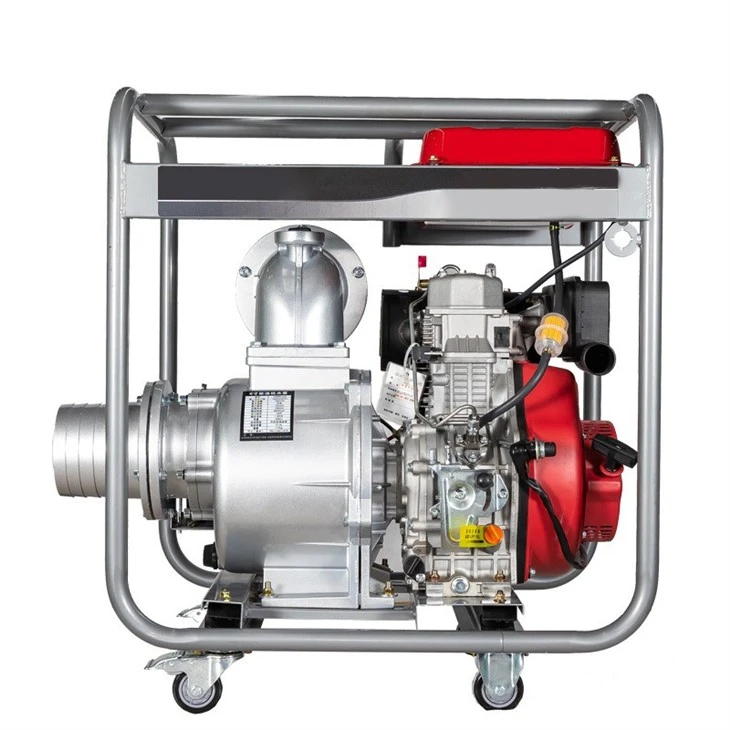
Before delving into the differences, let's first understand what gasoline water pumps are. Gasoline water pumps are devices powered by gasoline engines. They are widely used in various scenarios, such as construction sites, agricultural irrigation, and emergency water drainage. Their portability and relatively high power make them a popular choice for many users.
2. What is a Non - Self - Priming Gasoline Water Pump?
A non - self - priming gasoline water pump is a type of pump that requires the pump casing to be filled with water before it can start working effectively. This process is known as priming. When the pump is initially installed or after it has been idle for a long time, the user needs to manually pour water into the pump casing to remove the air inside. Without proper priming, the pump will not be able to create the necessary suction to draw water from the source.
One of the main advantages of non - self - priming pumps is their relatively simple design. They are often more cost - effective than self - priming pumps, making them a budget - friendly option for some users. However, their requirement for manual priming can be a significant drawback in certain situations. For example, if you need to move the pump frequently or use it in an area where water is not readily available for priming, a non - self - priming pump may not be the best choice.
Non - self - priming pumps are commonly used in applications where the water source is at a relatively stable level and the pump can be permanently installed. They are also suitable for situations where the priming process can be easily carried out, such as in a well - equipped industrial setting. If you are interested in a non - self - priming gasoline water pump for your construction site, you can check out our [Petrol Water Pump for Construction Site](/water - pumps/gasoline - water - pump/petrol - water - pump - for - construction - site.html).
3. What is a Self - Priming Gasoline Water Pump?
A self - priming gasoline water pump, on the other hand, has the ability to automatically remove air from the suction line and create a vacuum to draw water into the pump without the need for manual priming. This is achieved through a special design feature, usually a built - in priming chamber. When the pump is started, the impeller rotates, creating a low - pressure area in the priming chamber. This causes air to be drawn out of the suction line and replaced with water.
The main advantage of self - priming pumps is their convenience. They can be started quickly and easily, even in situations where the water source is not close or where it is difficult to manually prime the pump. This makes them ideal for portable applications, such as emergency water drainage in flood - prone areas or for use in remote locations.
Self - priming pumps are also more versatile than non - self - priming pumps. They can handle a wider range of water sources, including those with varying levels or those that are located at a distance from the pump. However, due to their more complex design, self - priming pumps are generally more expensive than non - self - priming pumps. If you are looking for a high - performance self - priming pump, our [Gasoline Powered High Pressure 2 Inch Water Pump](/water - pumps/gasoline - water - pump/gasoline - powered - high - pressure - 2 - inch - water.html) is a great option.
4. Performance Comparison
4.1 Suction Lift
The suction lift refers to the maximum vertical distance that a pump can draw water from the source. Self - priming pumps typically have a higher suction lift compared to non - self - priming pumps. This is because they are designed to create a better vacuum to draw water from a greater distance. Non - self - priming pumps may struggle to achieve a high suction lift, especially if they are not properly primed.
4.2 Flow Rate
Flow rate is another important performance indicator. In general, both self - priming and non - self - priming pumps can achieve similar flow rates, depending on their size and power. However, self - priming pumps may be able to maintain a more consistent flow rate, especially in situations where the water source is not stable. This is because they can quickly adapt to changes in the water level and continue to draw water effectively.
4.3 Efficiency
Efficiency is a measure of how effectively a pump converts the energy from the gasoline engine into the work of pumping water. Self - priming pumps may have slightly lower efficiency compared to non - self - priming pumps due to the additional energy required to operate the priming mechanism. However, this difference is often negligible in practical applications.
5. Maintenance and Durability
5.1 Maintenance
Non - self - priming pumps are generally easier to maintain because of their simpler design. They have fewer components, which means there are fewer parts that can break down. However, the need for manual priming can be time - consuming and may require some skill. Self - priming pumps, on the other hand, require more attention to the priming chamber and other special components. Regular cleaning and inspection of these parts are necessary to ensure proper operation.
5.2 Durability
Both types of pumps can be durable if they are properly maintained. However, self - priming pumps may be more prone to wear and tear in the priming mechanism over time. This is because the priming process involves the movement of air and water, which can cause erosion and damage to the components. Non - self - priming pumps, with their simpler design, may have a longer lifespan in some cases.
6. Application Considerations
6.1 Construction Sites
On construction sites, the choice between a self - priming and non - self - priming pump depends on the specific requirements. If the water source is stable and the pump can be permanently installed, a non - self - priming pump may be sufficient. However, if the site is large and the pump needs to be moved frequently, a self - priming pump would be more convenient. Our [Petrol Water Pump for Construction Site](/water - pumps/gasoline - water - pump/petrol - water - pump - for - construction - site.html) is available in both self - priming and non - self - priming options to meet different needs.
6.2 Agricultural Irrigation
In agricultural irrigation, self - priming pumps are often preferred because they can handle water sources that are located at a distance or at varying levels. They can also be easily moved from one field to another. However, if the water source is close and the pump can be set up in a fixed position, a non - self - priming pump may be a more cost - effective choice.
6.3 Emergency Situations
For emergency water drainage, such as during floods, self - priming pumps are essential. They can be quickly deployed and started without the need for manual priming, which is crucial in time - sensitive situations. Our [Portable 4 - Stroke Gas Petrol Driven Motor Water Pump](/water - pumps/gasoline - water - pump/portable - 4 - stroke - gas - petrol - driven - motor.html) is a self - priming pump that is ideal for emergency use.

7. Conclusion
In conclusion, the main difference between self - priming and non - self - priming gasoline water pumps lies in their priming capabilities. Self - priming pumps offer convenience and versatility, making them suitable for a wide range of applications, especially those that require quick start - up and portability. Non - self - priming pumps, on the other hand, are more cost - effective and easier to maintain, but they require manual priming.
When choosing a gasoline water pump, you should consider your specific needs, budget, and the application scenario. If you have any questions or need further assistance in selecting the right pump, please feel free to contact us. We are a professional gasoline water pump supplier, and we are committed to providing you with high - quality products and excellent service. Whether you need a self - priming or non - self - priming pump, we have a wide range of options to meet your requirements. Contact us today to start the purchasing and negotiation process!
References
- "Water Pump Handbook" by Karassik, I. J., Messina, J. P., Cooper, P. T., & Heald, C. C.
- "Pump Application Engineering" by Stepanoff, A. J.