

CFM, or cubic feet per minute, is a measurement that quantifies the volume of air or, in the context of a two - stage snow blower, the volume of snow and air mixture that the machine can move within a minute. As a supplier of two - stage snow blowers, understanding the CFM rating is crucial for both us and our customers.

Understanding the CFM Rating
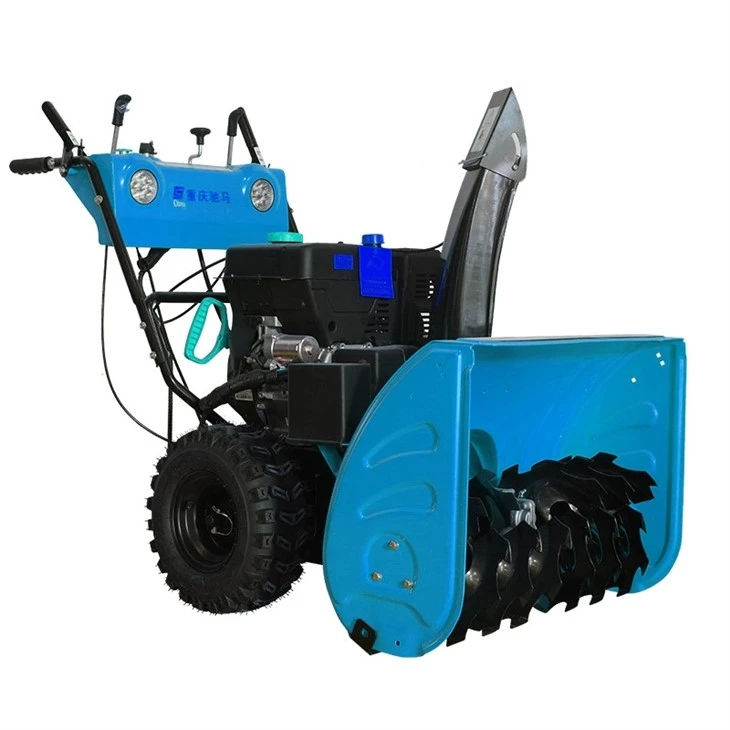
The CFM rating of a two - stage snow blower represents the efficiency and power of the machine in moving snow. In a two - stage snow blower, the first stage involves an auger that scoops up the snow from the ground. This auger rotates and feeds the snow into the second stage, which is a high - speed impeller. The impeller then throws the snow out through the discharge chute.
The CFM rating is determined by the combination of the auger's ability to collect snow and the impeller's power to expel it. A higher CFM rating means that the snow blower can move a larger volume of snow in a given time. For example, if a snow blower has a CFM rating of 1000, it can move 1000 cubic feet of snow and air mixture per minute.
Why CFM Rating is Important
1. Snow Clearing Speed
One of the most significant reasons the CFM rating is important is its direct impact on snow - clearing speed. In areas where heavy snowfalls are common, time is of the essence. A snow blower with a high CFM rating can clear a large area in a shorter period. For instance, during a blizzard, a snow blower with a 1500 CFM rating will clear a driveway much faster than one with a 500 CFM rating. This is especially important for commercial properties or large residential areas where quick snow removal is necessary to maintain normal operations.
2. Snow Density Handling
Snow density can vary greatly depending on the weather conditions. Light, fluffy snow has a lower density, while wet, heavy snow has a higher density. A snow blower with a high CFM rating is better equipped to handle different snow densities. When dealing with wet, heavy snow, a machine needs more power to move the snow effectively. A higher CFM rating indicates that the impeller has enough force to throw the denser snow farther and clear the path more efficiently.
3. Chute Throwing Distance
The CFM rating also affects the distance the snow can be thrown from the discharge chute. A snow blower with a higher CFM rating can throw snow farther, which is useful for creating larger snow piles and keeping the cleared area free of re - accumulated snow. For example, if you are clearing a sidewalk and want to throw the snow onto a lawn that is several feet away, a snow blower with a high CFM will be able to achieve this more effectively.
CFM Rating and Our Two - Stage Snow Blowers
As a supplier of two - stage snow blowers, we offer a range of products with different CFM ratings to meet the diverse needs of our customers. Our High Quality 24 - in 252cc Power Two Stage Gas Snow Blower is designed with a powerful impeller and an efficient auger system to provide a high CFM rating. This allows it to quickly clear large areas of snow, whether it's light, fluffy snow or heavy, wet snow.
Our Lightweight Gas Powered 2 Stage Snow Blowers are another great option for those who need a balance between portability and snow - clearing power. Despite their lightweight design, these snow blowers are engineered to deliver a decent CFM rating, making them suitable for smaller residential areas or areas with moderate snowfall.
The 24 Inch Lightweight Two Stage Self Propelled Snow Blower combines the advantages of self - propulsion and a good CFM rating. The self - propelled feature makes it easier to maneuver, while the CFM rating ensures efficient snow clearing.
Factors Affecting CFM Rating
1. Engine Power
The engine is the heart of a snow blower, and its power directly affects the CFM rating. A more powerful engine can drive the auger and impeller at higher speeds, resulting in a higher CFM. For example, a snow blower with a 300cc engine is likely to have a higher CFM rating than one with a 200cc engine, all other factors being equal.
2. Auger Design
The design of the auger also plays a crucial role in determining the CFM rating. A wider auger can collect more snow at once, increasing the volume of snow fed into the impeller. Additionally, the shape and pitch of the auger blades can affect how efficiently the snow is collected and transferred to the impeller.
3. Impeller Efficiency
The impeller's efficiency in expelling the snow is another factor. A well - designed impeller with the right shape and size can generate more force to throw the snow out, thereby increasing the CFM rating.
How to Choose the Right CFM Rating
When choosing a two - stage snow blower, it's important to consider the size of the area you need to clear and the typical snow conditions in your area. For small residential driveways and sidewalks with light to moderate snowfall, a snow blower with a CFM rating between 500 - 1000 may be sufficient. However, for larger areas or areas prone to heavy snowfalls, a snow blower with a CFM rating of 1000 or higher is recommended.
Conclusion
In conclusion, the CFM rating of a two - stage snow blower is a vital metric that determines its snow - clearing efficiency, speed, and ability to handle different snow conditions. As a supplier, we are committed to providing our customers with high - quality two - stage snow blowers with appropriate CFM ratings to meet their specific needs. Whether you are a homeowner looking to clear your driveway or a commercial property manager in need of a powerful snow - clearing solution, we have the right product for you.
If you are interested in learning more about our two - stage snow blowers or have questions about CFM ratings, we encourage you to contact us for a detailed discussion. We are here to help you make the best choice for your snow - clearing requirements.
References
- Snow Blower Technology Handbook, Industry Publication
- Engineering Principles of Snow Removal Equipment, Academic Journal