

Are self - propelled lawn mowers heavy to maneuver? This is a question that many homeowners and professional landscapers often ask when considering purchasing a new lawn mower. As a self - propelled lawn mower supplier, I have had the opportunity to interact with a wide range of customers and test various models. In this blog, I will delve into the factors that affect the maneuverability of self - propelled lawn mowers and whether they are truly heavy to handle.
Understanding Self - Propelled Lawn Mowers
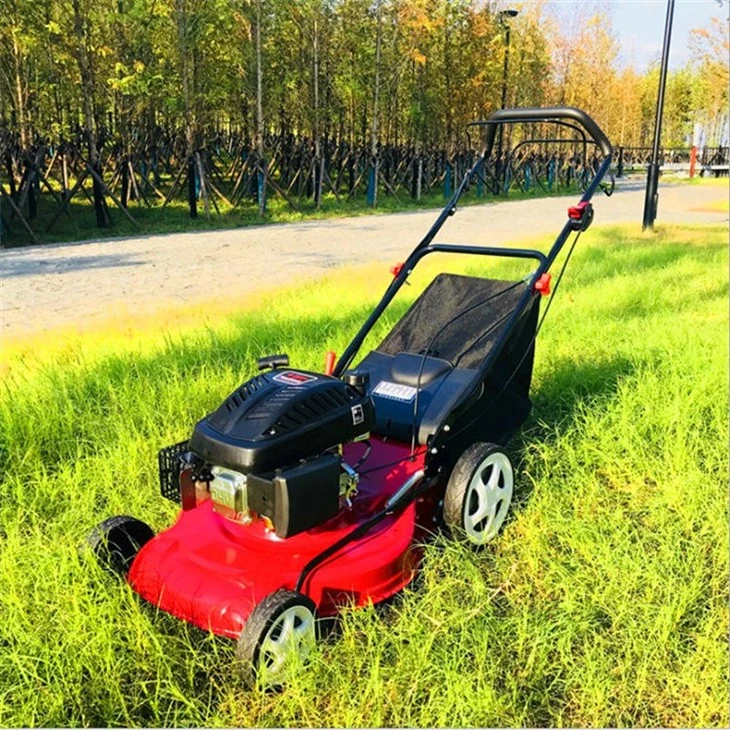
Self - propelled lawn mowers are designed to make lawn maintenance easier. Unlike push mowers, which require the user to exert physical force to move them forward, self - propelled mowers have a motor that powers the wheels, allowing them to move independently. This feature is particularly useful for large lawns or areas with uneven terrain, as it reduces the amount of physical effort required from the user.
There are two main types of self - propelled lawn mowers: front - wheel drive and rear - wheel drive. Front - wheel drive mowers are generally easier to turn and are more suitable for smaller lawns with tight corners. Rear - wheel drive mowers, on the other hand, provide more traction and are better for larger lawns and hilly terrain.
Factors Affecting Maneuverability
Several factors can influence how heavy or difficult it is to maneuver a self - propelled lawn mower.
Weight of the Mower
The weight of the mower itself is an obvious factor. Heavier mowers can be more challenging to move, especially when making turns or navigating around obstacles. However, modern self - propelled mowers are designed to balance weight and functionality. For example, the 173cc 21 - in Gas Self - propelled Reel Lawn Mower is engineered to have a weight that provides stability during operation while still being manageable for most users. The materials used in the construction of the mower, such as lightweight plastics and aluminum, can also help reduce the overall weight without sacrificing durability.
Wheel Design and Size
The design and size of the wheels play a crucial role in maneuverability. Larger wheels can roll over uneven ground more easily, reducing the effort required to push the mower. They also provide better traction, which is essential for maintaining control on slopes. Additionally, the type of wheel tread can affect how well the mower grips the ground. For instance, mowers with deep - treaded wheels are better suited for wet or muddy conditions. The Craftsman Store 163cc 22 - in Gas Self - propelled Lawn Mower features well - designed wheels that enhance its maneuverability on various terrains.
Drive System
The drive system of a self - propelled lawn mower can impact how heavy it feels to maneuver. Some mowers have a variable - speed drive system, which allows the user to adjust the speed of the mower according to the terrain and their own physical ability. This can make it easier to control the mower, especially when moving at different speeds or making turns. Other mowers may have a single - speed drive system, which can be less flexible but may still be sufficient for basic lawn maintenance.
Handle Design
The handle of the lawn mower is another important factor. A well - designed handle should be comfortable to grip and allow for easy control of the mower. Adjustable handles are particularly useful, as they can be customized to fit the height of the user. This reduces strain on the back and arms, making the mower easier to maneuver for extended periods.
Maneuverability in Different Situations
Let's consider how self - propelled lawn mowers perform in different lawn conditions.
Flat and Even Lawns
On flat and even lawns, self - propelled lawn mowers are generally very easy to maneuver. The self - propelled feature takes care of the forward movement, and the user only needs to guide the mower in the desired direction. The weight of the mower is less of an issue in this situation, as the wheels can roll smoothly over the ground.
Uneven or Hilly Lawns
On uneven or hilly lawns, the maneuverability of self - propelled lawn mowers becomes more challenging. The weight of the mower can make it difficult to push uphill, and the traction of the wheels becomes crucial for maintaining control. Rear - wheel drive mowers are often a better choice for hilly terrain, as they provide more power and traction. However, even with a rear - wheel drive mower, the user may need to be more cautious when operating on slopes to prevent the mower from tipping over.
Lawns with Obstacles
When mowing a lawn with obstacles such as trees, flower beds, or garden furniture, the ability to maneuver the mower becomes essential. Self - propelled mowers with a small turning radius are better suited for this type of lawn. The user needs to be able to make sharp turns and navigate around the obstacles without getting stuck. The design of the wheels and the drive system can also affect how well the mower can handle these situations.
Comparing with Other Types of Lawn Mowers
When compared to push mowers, self - propelled lawn mowers are generally easier to maneuver, especially for larger lawns. Push mowers require the user to exert a significant amount of physical force to move them forward, which can be tiring, especially over long distances. Self - propelled mowers, on the other hand, do most of the work for the user, reducing the amount of effort required.
However, when compared to robotic lawn mowers, self - propelled mowers may seem more difficult to maneuver. Robotic lawn mowers are automated and can navigate around a lawn on their own, without the need for human intervention. They are ideal for small to medium - sized lawns and can be programmed to mow at specific times. However, robotic lawn mowers are generally more expensive and may not be suitable for large or complex lawns.

Tips for Easier Maneuverability
If you find that your self - propelled lawn mower is a bit heavy to maneuver, here are some tips to make the process easier:
- Maintain the Mower: Regular maintenance, such as sharpening the blades, checking the tire pressure, and lubricating the moving parts, can ensure that the mower operates smoothly and is easier to maneuver.
- Adjust the Drive Speed: If your mower has a variable - speed drive system, adjust the speed according to the terrain and the task at hand. A slower speed may be more suitable for making turns or mowing around obstacles.
- Use Proper Body Mechanics: When operating the lawn mower, stand upright and use your legs to guide the mower, rather than relying solely on your arms. This reduces strain on the back and arms and makes the mower easier to control.
Conclusion
In conclusion, while self - propelled lawn mowers can vary in terms of their maneuverability, they are generally designed to be easier to handle than push mowers. The weight of the mower is just one of the many factors that affect maneuverability, and modern mowers are engineered to balance weight with functionality. By considering factors such as wheel design, drive system, handle design, and the specific lawn conditions, you can choose a self - propelled lawn mower that is easy to maneuver and meets your needs.
If you are in the market for a self - propelled lawn mower, I encourage you to contact us for more information. Our team of experts can help you select the right mower for your lawn and provide you with valuable advice on maintenance and operation. We are committed to providing high - quality products and excellent customer service. Let's start a conversation about your lawn mower needs and find the perfect solution for you.
References
- Lawn Care Association of America. (2023). Guide to Lawn Mower Selection.
- Consumer Reports. (2023). Self - Propelled Lawn Mower Reviews.