

Hey there! As a supplier of two stage snow blowers, I often get asked about the kind of oil these machines need. So, I thought I'd put together this blog to share all the details.
First off, let's understand why oil is so important for a two stage snow blower. Just like in a car engine, the oil in a snow blower serves several crucial functions. It lubricates the moving parts, reducing friction and wear. This helps to extend the life of the engine and keeps it running smoothly. It also helps to cool the engine by carrying away heat generated during operation. And it prevents rust and corrosion by forming a protective layer on the internal components.
Now, when it comes to choosing the right oil for your two stage snow blower, there are a few things to consider.
Viscosity
Viscosity is a measure of an oil's resistance to flow. It's usually indicated by a number followed by the letter "W" (which stands for winter) and another number. For example, 5W - 30. The first number (with the "W") represents the oil's viscosity at low temperatures, and the second number represents its viscosity at high temperatures.
In colder climates, you'll want an oil with a lower first number. For instance, a 5W or 10W oil will flow more easily in cold weather, ensuring that the engine gets proper lubrication when you start it up on a frosty morning. In warmer regions, an oil with a higher second number might be more suitable. However, most modern two stage snow blowers are designed to work well with multi - viscosity oils like 5W - 30, which can perform well in a wide range of temperatures.
Synthetic vs. Conventional Oil
There are two main types of oil: synthetic and conventional.
Conventional Oil: This is the traditional type of oil made from refined crude oil. It's generally less expensive than synthetic oil. Conventional oil works well in normal operating conditions and is a good choice if you use your snow blower occasionally and in moderate temperatures.
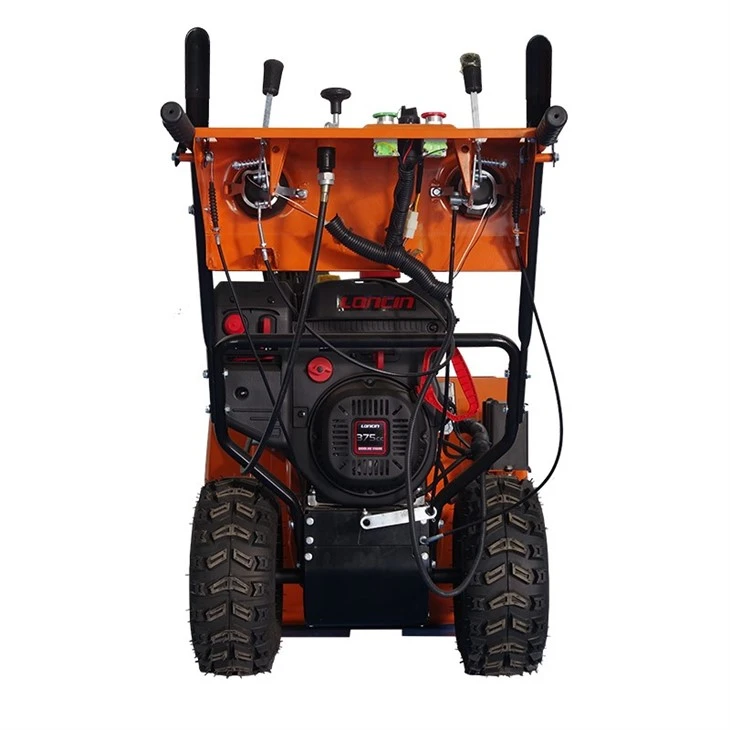

Synthetic Oil: Synthetic oil is man - made and offers several advantages over conventional oil. It has better low - temperature flow properties, which means it can protect the engine better in cold weather. It also has better high - temperature stability, so it can handle the heat generated during long periods of use. Synthetic oil resists oxidation and breakdown better, which can extend the oil change intervals. If you use your snow blower frequently, especially in extreme temperatures, synthetic oil is a great option.
API Rating
The American Petroleum Institute (API) assigns ratings to oils based on their performance. You'll usually see an API symbol on the oil container. Look for an oil with a rating that meets or exceeds the requirements of your snow blower's engine. For most two stage snow blowers, an oil with an API rating of SJ or higher is recommended.
Our Two Stage Snow Blowers and Oil Recommendations
We offer a range of high - quality two stage snow blowers, each with its own specific oil requirements.
- 24 Inch Lightweight Two Stage Self Propelled Snow Blower: This lightweight and efficient snow blower is perfect for clearing driveways and sidewalks. For this model, we recommend using a 5W - 30 synthetic oil. It provides excellent protection in cold weather and ensures smooth operation.
- Craftsman Select 24 - in 208cc Two Stage Gas Snow Blower: With a powerful 208cc engine, this snow blower can handle larger snow - clearing jobs. We suggest using a high - quality 10W - 30 conventional oil if you operate it in moderate temperatures. However, if you're in a colder area, switch to a 5W - 30 synthetic oil.
- High Quality 24 - in 252cc Power Two Stage Gas Snow Blower: This heavy - duty snow blower is built for tough snow conditions. For optimal performance, use a 5W - 30 synthetic oil. It will keep the engine well - lubricated and protected, even during extended use.
How to Change the Oil in Your Two Stage Snow Blower
Changing the oil in your two stage snow blower is a relatively simple process, but it's important to do it correctly.
- First, make sure the engine is cool. You don't want to burn yourself on a hot engine.
- Locate the oil drain plug. It's usually on the bottom of the engine. Place a drain pan underneath it.
- Remove the drain plug and let the old oil drain out completely. This might take a few minutes.
- While the oil is draining, you can clean the drain plug and the area around it.
- Once the oil has drained, replace the drain plug.
- Now, locate the oil fill cap. It's usually on the top of the engine. Remove the cap and slowly pour in the new oil. Use a funnel to avoid spills.
- Check the oil level using the dipstick. Add more oil if necessary until it reaches the proper level.
- Replace the oil fill cap.
Frequency of Oil Changes
How often you need to change the oil in your two stage snow blower depends on how often you use it. As a general rule, it's a good idea to change the oil after every 25 - 50 hours of operation. If you use your snow blower only a few times a year, you might be able to get away with changing the oil once a season. But if you use it frequently, especially in harsh conditions, more frequent oil changes are recommended.
Conclusion
Choosing the right oil for your two stage snow blower is essential for keeping it running smoothly and extending its lifespan. Whether you go for synthetic or conventional oil, make sure it has the right viscosity and API rating for your engine. And don't forget to change the oil regularly.
If you're in the market for a high - quality two stage snow blower or have any questions about oil or maintenance, we're here to help. We're always open to discussing your specific needs and requirements. Whether you're a homeowner looking to clear your driveway or a professional in the snow - removal business, we've got the right snow blower for you. Reach out to us to start a conversation about your potential purchase.
References
- Briggs & Stratton Engine Manuals
- Toro Snow Blower Maintenance Guides
- Murray Snow Blower Owner's Manuals