

What is the minimum cutting height of self - propelled lawn mowers for a close cut?
As a supplier of self - propelled lawn mowers, I've encountered numerous customers seeking the perfect equipment for a close and precise lawn cut. One of the most frequently asked questions is about the minimum cutting height of these machines. In this blog, I'll delve into this topic in detail, exploring the factors influencing minimum cutting height, the ideal minimum height for different lawn types, and examples of our products with their respective minimum cutting heights.
Understanding the concept of minimum cutting height
The minimum cutting height of a self - propelled lawn mower refers to the shortest length to which the mower can trim the grass blades. It is a crucial specification as it directly impacts the appearance and health of your lawn. A close cut can give your lawn a neat and well - manicured look, but it needs to be balanced with the grass's ability to thrive. If the grass is cut too short, it can stress the turf, make it more vulnerable to pests and diseases, and cause it to turn brown or yellow.
Factors influencing the minimum cutting height
- Lawn mower design: Different types of self - propelled lawn mowers have varying minimum cutting heights due to their design. For example, reel mowers typically have a lower minimum cutting height compared to rotary mowers. Reel mowers use a series of circular blades that rotate around a horizontal axis, allowing for a very precise and close cut. Rotary mowers, on the other hand, use a single spinning blade, which may not be able to achieve as low a cutting height.
- Blade quality: The sharpness and quality of the blades also play a role in determining the minimum cutting height. Dull blades can tear the grass instead of cutting it cleanly, which is especially problematic when trying to achieve a close cut. High - quality blades are sharper and can cut through the grass more efficiently, enabling a lower cutting height without damaging the turf.
- Grass type: Different grass species have different optimal cutting heights. For example, Bermuda grass can tolerate a much lower cutting height (as low as 0.5 inches) compared to Kentucky bluegrass, which generally does best when cut at a height of 2 - 3 inches. When choosing a self - propelled lawn mower, it's important to consider the type of grass in your lawn and select a mower with a minimum cutting height that is suitable for that grass species.
Ideal minimum cutting height for different lawn types
- Bermuda grass: This warm - season grass is known for its ability to tolerate low - cut maintenance. A minimum cutting height of 0.5 - 1.5 inches is ideal for Bermuda grass. A close cut can promote a denser and more attractive turf, especially in sunny areas. Our 173cc 21 - in Gas Self - propelled Reel Lawn Mower is an excellent choice for Bermuda grass lawns, as it can achieve a very low cutting height with its precision reel blade system.
- Zoysia grass: Zoysia grass is another warm - season grass that can tolerate a relatively low cutting height. A minimum of 1 - 2 inches is recommended for a healthy and attractive Zoysia lawn. The close cut helps to create a thick and lush turf, but care should be taken not to cut it too short, especially during periods of stress.
- Kentucky bluegrass: This cool - season grass prefers a higher cutting height. A minimum of 2 inches is generally recommended to maintain its health and appearance. Cutting Kentucky bluegrass too short can weaken the grass and make it more susceptible to disease and drought. Our Craftsman Store 163cc 22 - in Gas Self - propelled Lawn Mower offers a range of cutting heights, including a minimum that is suitable for Kentucky bluegrass lawns.
- Fescue grass: Fescue is a cool - season grass that also benefits from a relatively high cutting height. A minimum of 2 - 3 inches is ideal to keep the grass healthy and looking its best. Fescue has deep roots and can better withstand heat and drought when it is not cut too short.
Examples of our self - propelled lawn mowers and their minimum cutting heights
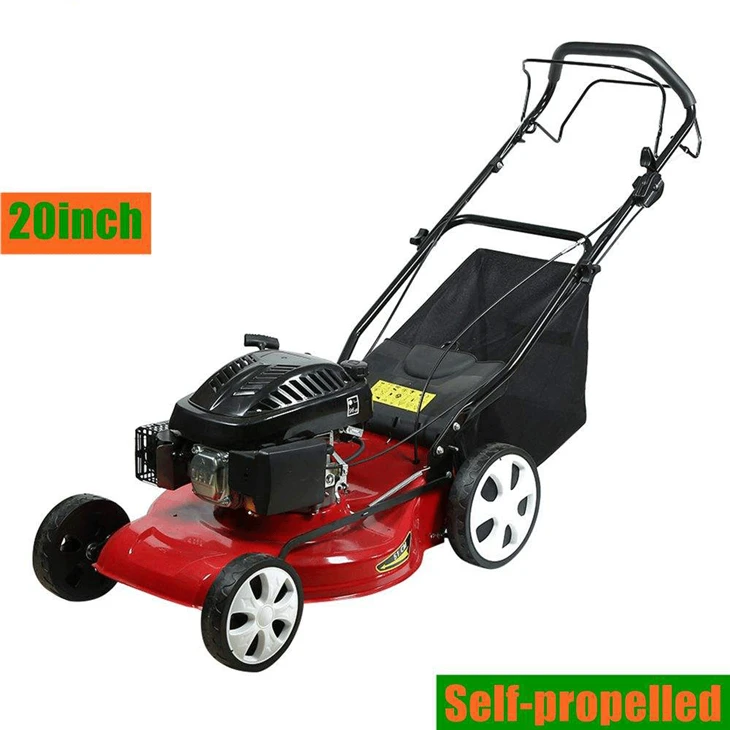
- Craftsman Store 163cc 22 - in Gas Self - propelled Lawn Mower: This high - performance lawn mower offers a minimum cutting height of 1 inch. It is suitable for a variety of grass types, including Kentucky bluegrass and fescue. The 22 - inch cutting deck allows for efficient mowing, and the self - propelled feature makes it easy to operate on large lawns.
- 173cc 21 - in Gas Self - propelled Reel Lawn Mower: With a minimum cutting height of 0.5 inches, this reel mower is perfect for achieving a very close cut on Bermuda grass and other warm - season grasses. The gas - powered engine provides the necessary power, and the self - propelled functionality ensures smooth and effortless operation.
Conclusion and invitation to contact
In conclusion, the minimum cutting height of self - propelled lawn mowers is an important consideration when choosing the right equipment for your lawn. By understanding the factors that influence it and the ideal minimum heights for different grass types, you can make an informed decision. Our range of self - propelled lawn mowers offers a variety of minimum cutting heights to suit different needs. Whether you have a Bermuda grass lawn that requires a very close cut or a Kentucky bluegrass lawn that needs a higher cutting height, we have the perfect solution for you.
If you're interested in learning more about our products or are ready to make a purchase, we encourage you to contact us. Our team of experts is available to answer your questions, provide recommendations based on your lawn's specific requirements, and assist you with the purchasing process. Let us help you achieve the perfect lawn with our high - quality self - propelled lawn mowers.
References
- Beard, J. B. (1973). Turfgrass: Science and Culture. Prentice - Hall.
- Patton, A. J., & Reicher, Z. (2019). Turfgrass Management. Pearson.